
- Duration
- 7 days, 5 nights
- City
- New York
- Focus
- History & civil rights
- Group
- School groups
- Departs
- From the UK
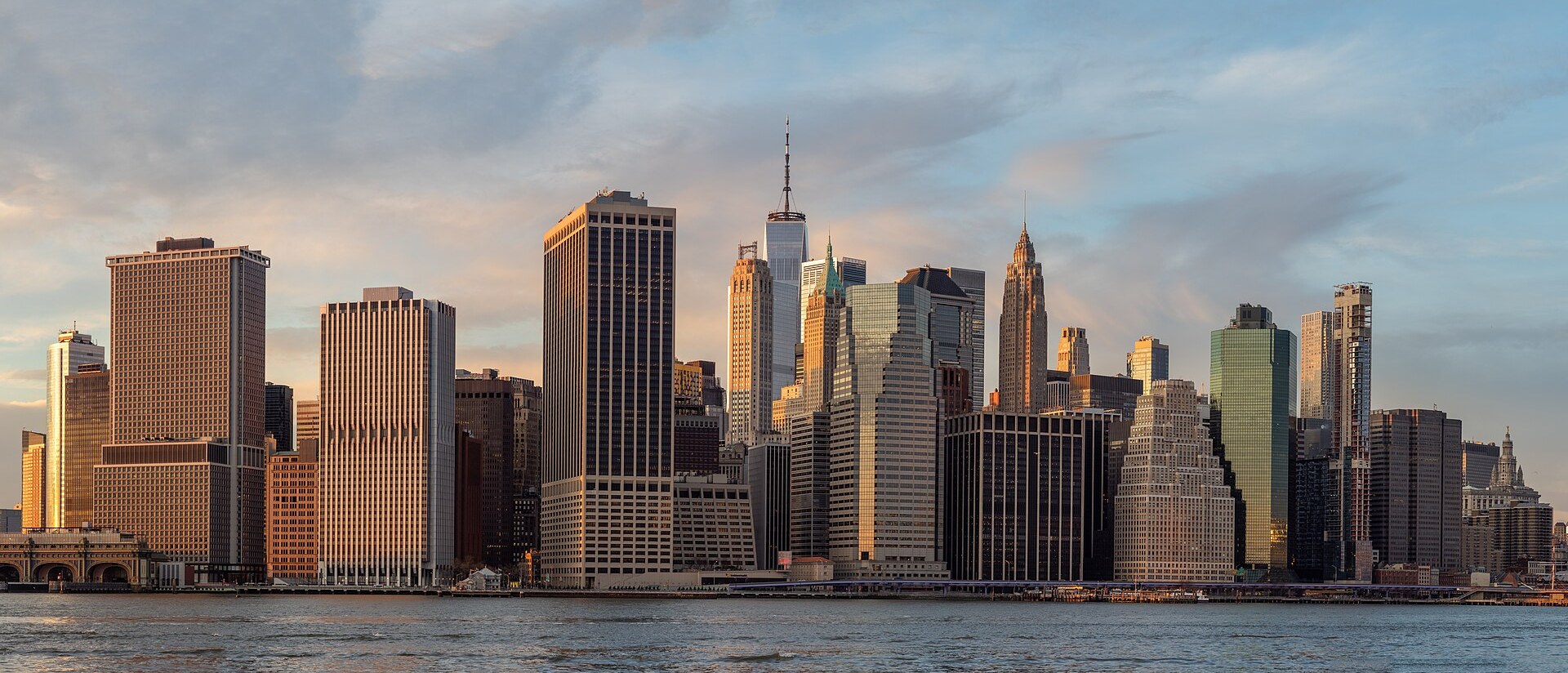
New York was founded in 1624 as a Dutch trading post called New Amsterdam, and has stood at the crossroads of American history ever since — the Revolution, the great waves of immigration, the birth of the modern financial system.
This tour walks that story. Lower Manhattan where George Washington took the oath of office, Ellis Island and the Statue of Liberty where twelve million arrivals first set foot in America, the tenements of the Lower East Side, Harlem's civil rights history, and the 9/11 Memorial. Five nights, with the city itself as the classroom.
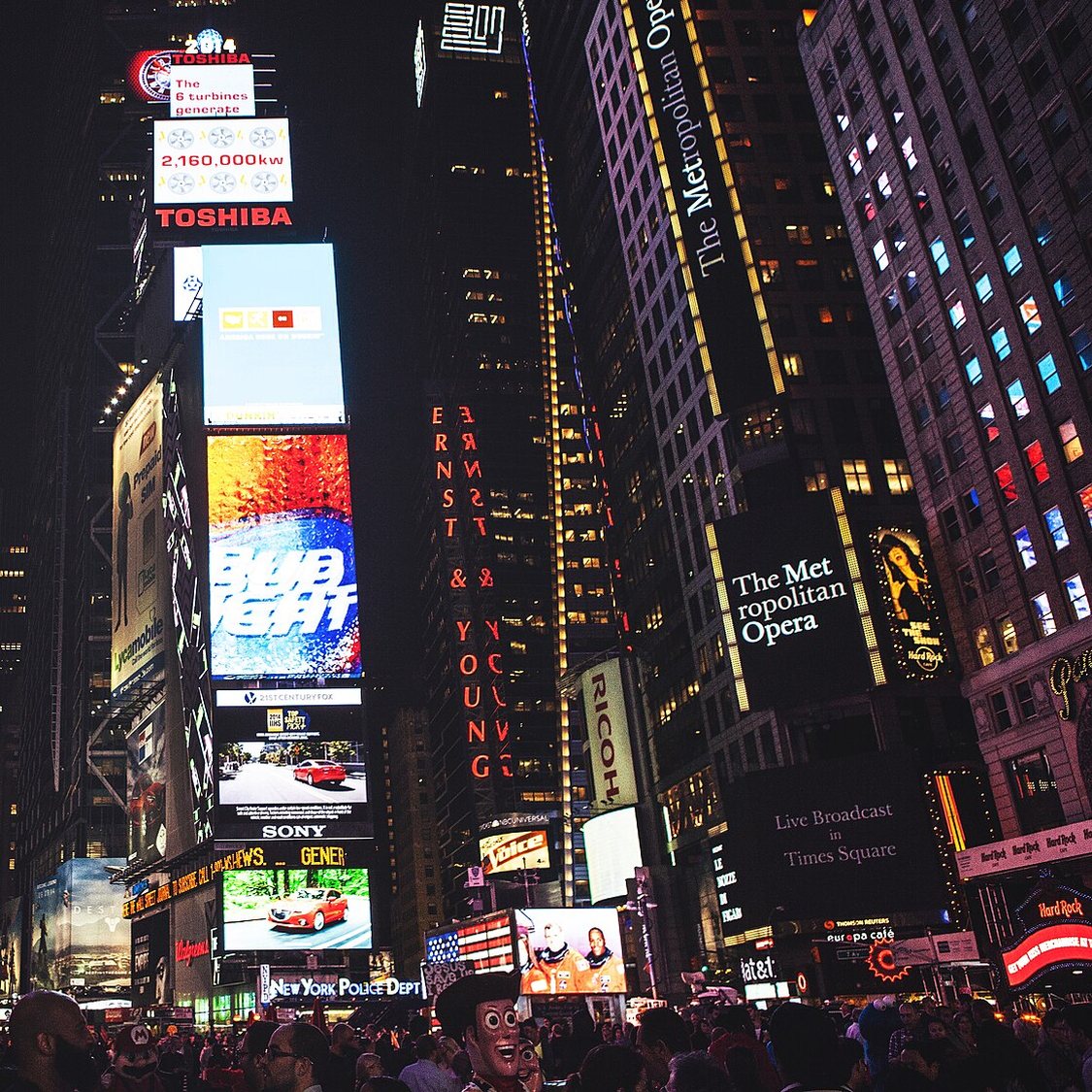
Day 1 · Land in New York, check in, and walk into the lights of Times Square
First night, bright lights
Arrival and Times Square by night
Land in New York, check in, and walk into the lights of Times Square
-
Fly into New York
-
Check in at one of our regular hotels in central New York
-
HI New York City Hostel — Perfect for Student History Groups
Our usual base for history groups, on the Upper West Side. The building is part of the story: a restored red-brick residence of 1883, its stone facade a piece of the Gilded Age city.
The location does the work. Ellis Island and the Statue of Liberty, Lower Manhattan where New Amsterdam stood, Harlem, and Central Park are all a short subway ride away. It is also the largest hostel in North America, so students share the common rooms and gardens with travellers from all over the world.
-
Check in at Freehand New York
Our alternative base, in the Flatiron and Gramercy district, housed in the former George Washington Hotel. In the early twentieth century it put up writers, artists and musicians, and its Art Deco detailing still shows the city's Jazz Age style.
From here students are walking distance from Union Square, long a gathering point for political rallies and the labour movement, the Flatiron Building, and Greenwich Village, with the Lower East Side a short ride away.
-
Visit Times Square at night
Behind the billboards is a hundred-year timeline. Longacre Square was renamed Times Square in 1904, when The New York Times moved its headquarters there; the city's first electrified billboard went up the same year.
• Theatre and entertainment: through the twentieth century the square became the centre of Broadway, vaudeville and the great movie palaces.
• Decline and revival: run down and associated with crime in the 1970s and 80s, then remade from the 1990s by a huge redevelopment programme.
• The ball drop: first held in 1907, and still one of the city's best-known traditions.
Seeing it lit up is a good first lesson in how a place sells itself.
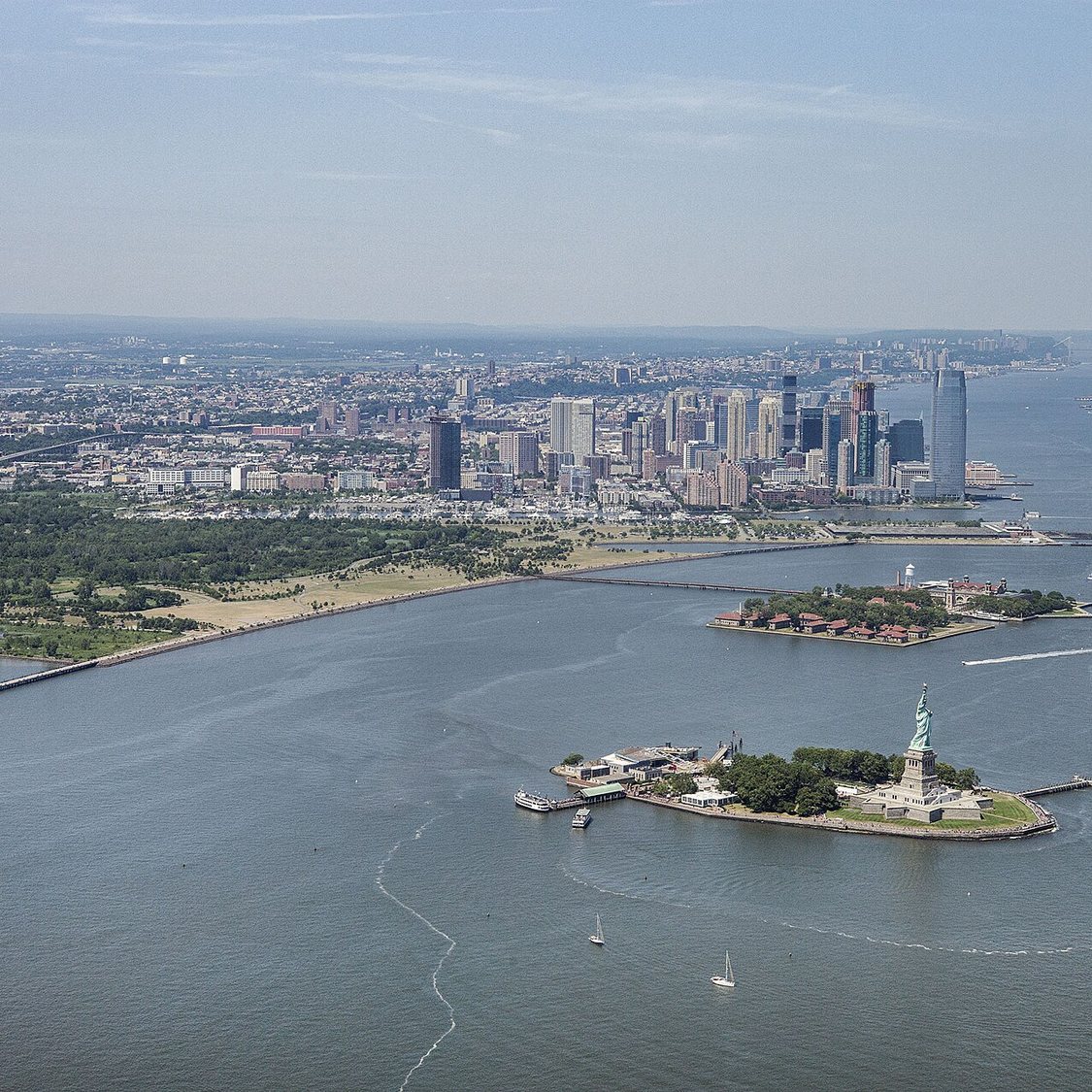
Day 2 · Ellis Island, the 9/11 Memorial, and the Empire State after dark
From huddled masses to high rises
Liberty Island and Lower Manhattan
Ellis Island, the 9/11 Memorial, and the Empire State after dark
-
Breakfast at the accommodation
-
Boat trip to Liberty Island & Ellis Island
A crossing of New York Harbour, and the central story of American immigration.
• Liberty Island: the Statue of Liberty, a gift from France in 1886 and over 300 feet tall, was the first thing millions of arrivals saw of America.
• Ellis Island: the main federal immigration station from 1892 to 1954, through which more than twelve million people passed, most of them facing long inspections and medical checks. The National Museum of Immigration now tells their stories through exhibits, archives and recorded testimony.
• The crossing itself: the Manhattan skyline rises behind the boat, the same view immigrants had arriving by ship.
-
National Museum of the American Indian
In the Alexander Hamilton U.S. Custom House at Bowling Green, this Smithsonian museum covers the Americas before European colonisation and the continuing story of Indigenous peoples.
• The building: a Beaux-Arts landmark of 1907, built for a city grown rich on trade, standing on land that belonged to the Lenape.
• The collection: one of the world's most comprehensive holdings of Native American art and artefacts, spanning 12,000 years and three continents.
The visit covers pre-Columbian societies, the impact of European arrival, and how Native communities preserved and adapted their traditions — the part of America's story that begins long before 1624.
-
Visit the 9-11 Museum, Memorial & The Oculus
The World Trade Center site, and the way the city has remembered and rebuilt.
• The Memorial: two vast reflecting pools sit in the footprints of the Twin Towers, lined with bronze panels bearing the names of nearly 3,000 victims of the 2001 and 1993 attacks.
• The Museum: beneath the memorial, artefacts, personal testimony and recordings tell the story of the day, the lives lost and what followed.
• The Oculus: Santiago Calatrava's transit hall, its white ribs suggesting a bird in flight, built as a deliberate answer to the loss commemorated outside.
Students see not only the event but how a society chooses to remember it.
-
Shop at Macy's
Macy's Herald Square opened in 1902 and became the largest department store in the world, covering a whole city block. It was among the first to use window displays and themed shopping floors, and was made a National Historic Landmark in 1978 for its part in the invention of modern retail.
It has shaped the city's calendar too: the Thanksgiving Day Parade began here in 1924 and its Christmas windows have drawn crowds for generations.
-
Go up the Empire State Building at night
Finished in 1931, in the depths of the Great Depression, and the tallest building in the world for nearly forty years.
• Built in just over a year, at the height of the race to put up ever-taller towers in Manhattan, and one of the great statements of Art Deco engineering.
• On screen from King Kong in 1933 onwards, which did as much as the architecture to make it famous.
• From the observation deck at night: the Manhattan grid, the glow of Times Square, the East River bridges and the Statue of Liberty in the distance.
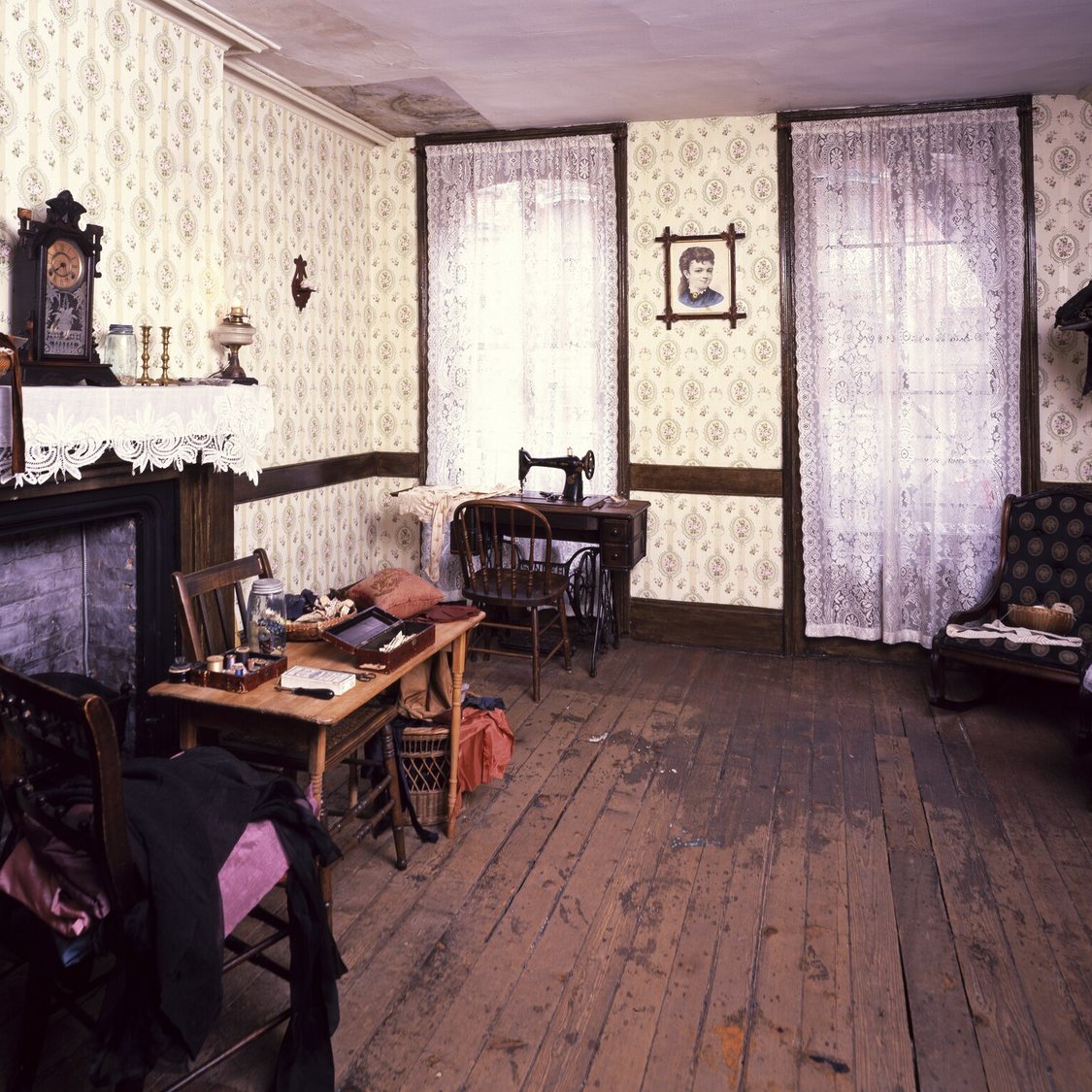
Day 3 · Immigrant history at the Tenement Museum, then across the Brooklyn Bridge
Walk-ups and walkways
The Lower East Side and Brooklyn
Immigrant history at the Tenement Museum, then across the Brooklyn Bridge
-
Breakfast at the accommodation
-
The Tenement Museum – Lower East Side
Restored nineteenth-century apartment buildings at 97 and 103 Orchard Street, which once housed thousands of immigrants — Irish, German, Italian, Jewish, and later Chinese and Puerto Rican — in cramped rooms with little light, air or sanitation.
Guided tours take students inside apartments furnished as they were in the 1860s, 1910s and 1930s, with oral histories and costumed interpreters giving the residents their voices back.
It is the best place in the city to connect classroom work on migration, industrialisation and social reform to the families who actually lived it.
-
Walking Tour – The Food of the Lower East Side
A guided walk through the neighbourhood with a local, taking in its history through its food: tastings at local eateries, pastrami and bialys among them, and enough of them to stand in for lunch.
-
Take Subway to DUMBO – Down Under the Manhattan Bridge Overpass
One of Brooklyn's smartest neighbourhoods now, and a clear record of how a waterfront changes.
• Industrial roots: warehouses and factories lined the East River through the nineteenth and early twentieth centuries, making everything from soap to coffee, with generations of Irish, Italian and later Caribbean workers.
• What is still standing: red-brick warehouses and cobblestone streets, framed by the Manhattan Bridge (1909) and the Brooklyn Bridge (1883).
• What changed: the factories closed, artists took the empty lofts, and the lofts became offices and luxury flats — gentrification you can see in a single street.
-
Visit the Time Out Market
A food hall in a refurbished warehouse on the DUMBO waterfront, part of the shipping and manufacturing district that once unloaded goods from around the world.
It opened in 2019, bringing together some of the city's best cooks under one roof, much as the market halls of the Lower East Side once served immigrant communities. The rooftop terrace looks out at the Brooklyn and Manhattan Bridges and the skyline beyond — the waterfront that meant opportunity to people arriving by ship.
-
Walk across the Brooklyn Bridge
Finished in 1883, the first steel-wire suspension bridge in the world and then the longest, joining the independent city of Brooklyn to Manhattan.
• The Roeblings: designed by John A. Roebling and completed by his son Washington — and by Washington's wife Emily, who ran the works for years after her husband fell ill.
• Who built it: largely immigrant labour, working in caissons under the river where decompression sickness, "the bends", was first widely documented.
• The walk: Gothic stone arches, the fan of steel cable, and the full span of Manhattan, Brooklyn and the East River.
-
Check out Little Italy & eat Gelato
From the late nineteenth century thousands of Italian immigrants settled around Mulberry Street, bringing their food, language, religion and festivals with them and making this one of the best-known immigrant neighbourhoods in America. The Feast of San Gennaro, first held in 1926, is still the high point of its year.
Little Italy has shrunk a great deal as other communities moved in, which is itself part of the lesson. The gelato is the enjoyable end of a serious point: food is how traditions survive a crossing.
Day 4 · From international diplomacy to protest, folk music and Washington Square
Peace talks and protest songs
The UN, Central Park and the Village
From international diplomacy to protest, folk music and Washington Square
-
Breakfast at the accommodation
-
Visit to the UN Building
The headquarters opened in 1952, seven years after the organisation was founded in the wake of the Second World War.
• The building: designed by an international team under Wallace Harrison, with Le Corbusier and Oscar Niemeyer among the contributors.
• What has happened here: the declarations on human rights, decolonisation and nuclear disarmament, and every major debate from the Cold War to the present.
• The tour: inside the General Assembly Hall and the Security Council chamber, where those debates take place.
A good place to weigh how far international institutions have managed to work, and where they have not.
-
Ride the Cable Car to Roosevelt Island
The Roosevelt Island Tramway, opened in 1976, was the first commuter cable car in North America — built as a stopgap while the island had no subway, and kept because New Yorkers liked it. It runs high above the East River with the skyline and the Queensboro Bridge below.
The island has a harder history. As Blackwell's Island it held hospitals, asylums and a prison through the nineteenth century, the city's answer to the people its growth left behind. It was rebuilt as housing in the late twentieth century, and at its southern tip is the FDR Four Freedoms Park, dedicated in 2012 to Roosevelt's speech of 1941.
-
Central Park
Not simply a park but a landmark in the history of urban planning.
• Origins: laid out from the 1850s by Frederick Law Olmsted and Calvert Vaux as America's first great landscaped public park, built on the belief that cities needed open ground for the health of the people in them.
• A democratic space, at least in intention: somewhere rich and poor would mix, and an escape from the tenements downtown.
• What it cost: swamp and farmland were reshaped into lakes and meadows, and Seneca Village — a settlement of African American landowners and Irish immigrants — was cleared to make room.
Look for Bethesda Terrace, The Mall, the Great Lawn and Belvedere Castle.
-
Go to see the musicians at Strawberry Fields
A memorial to John Lennon, who lived across the road at the Dakota and was killed outside it in 1980. It opened in 1985 as a "Garden of Peace", designed with Yoko Ono, with the black-and-white Imagine Mosaic at its centre and plants and stones donated by countries around the world.
Buskers gather here to play Lennon and the Beatles, which makes it a rare thing: a memorial that is still in use, every day, by the people it is for.
-
Take the subway to Greenwich Village
The Village kept its old irregular street plan when the rest of Manhattan went onto the grid, and something of that refusal runs through its history.
• Bohemian culture: by the early twentieth century a centre for writers, painters and radicals — Edna St. Vincent Millay and E. E. Cummings among them — with the coffeehouses and clubs as the meeting rooms.
• The Stonewall uprising of 1969, at the Stonewall Inn, the turning point of the LGBTQ+ rights movement.
• The folk revival of the 1960s, which is where Bob Dylan started.
Brick townhouses, leafy squares and old churches, and gentrification pressing on all of it.
Eat in the Village — pizza, falafel and the rest.
-
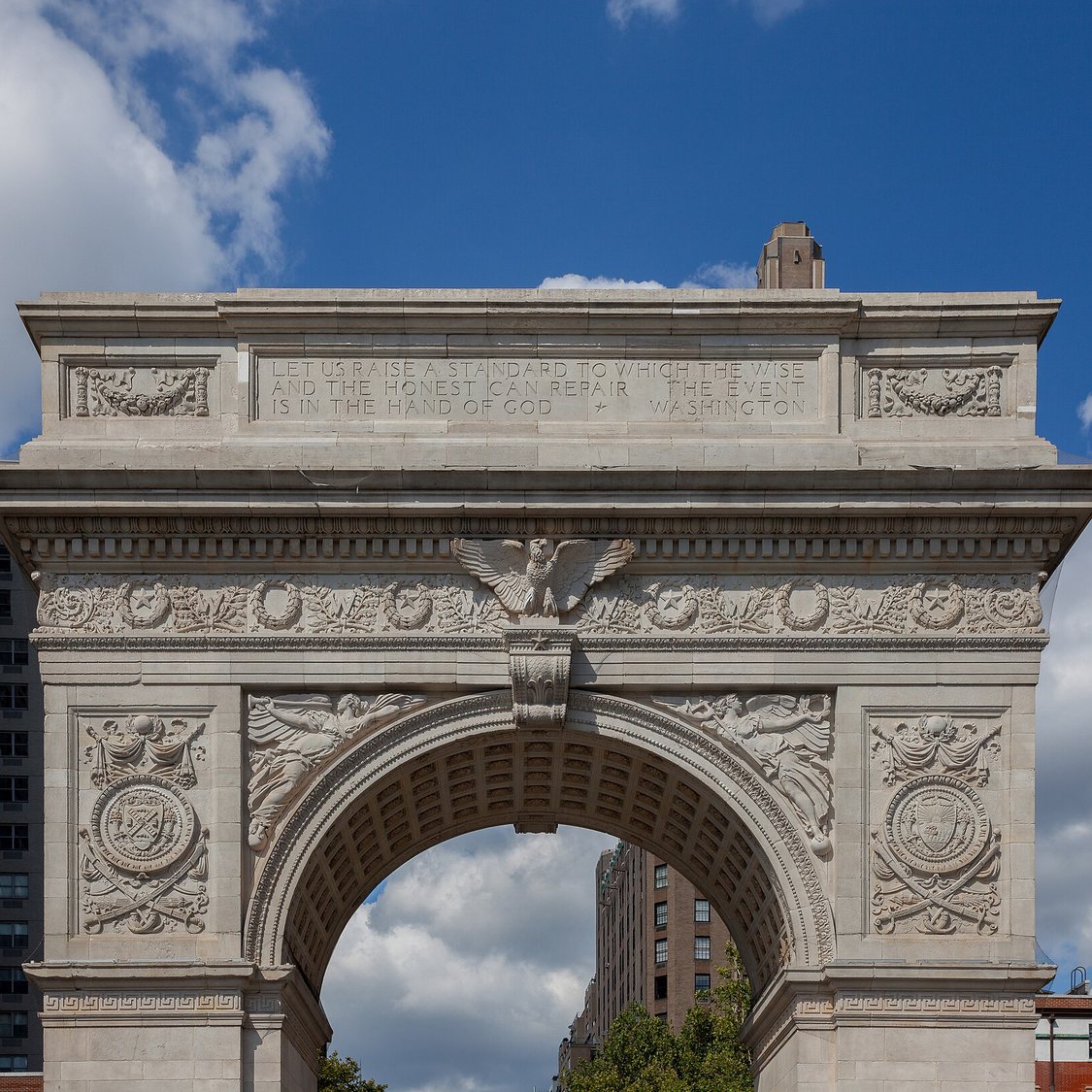
See Washington Square Park – A Place of Protest, Play, and Memory
• Before the park: a potter's field, where thousands of poor and unidentified New Yorkers were buried in the late eighteenth and early nineteenth centuries. Some remains are still beneath it.
• The arch: raised in 1892 for the centenary of George Washington's inauguration, and the symbol of the square ever since.
• Protest: the park has been a stage for political movement after political movement, from early labour rallies through the Vietnam War to the climate demonstrations of recent years.
Today it is chess players, jazz musicians and NYU students — the same public square, still doing the same job.
-
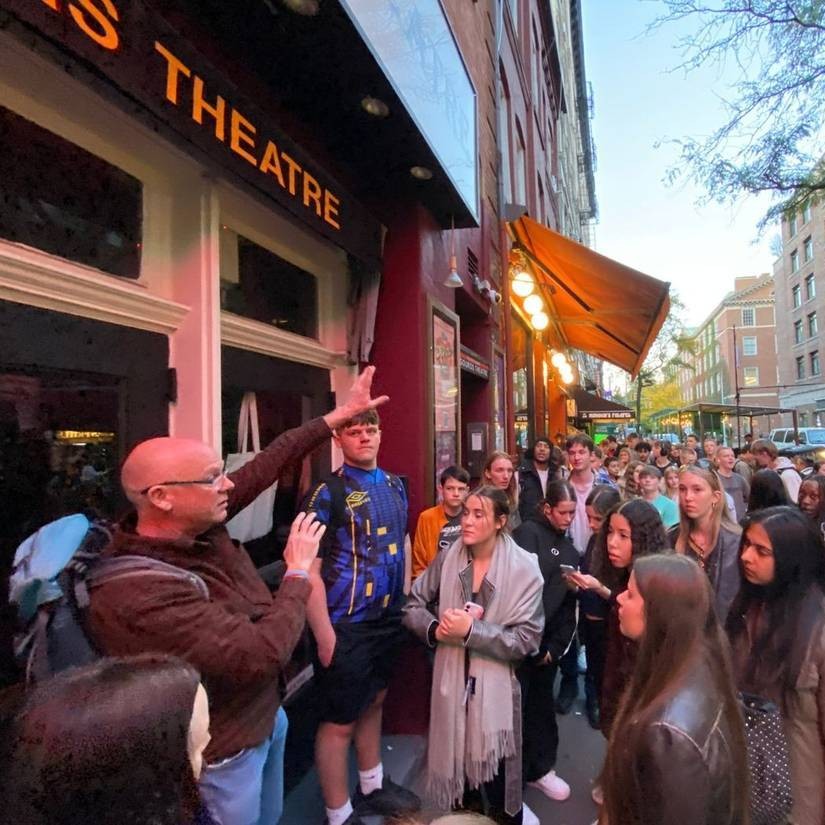
Live music at Cafe Wha? – Greenwich Village
Opened in 1959 and quickly a launchpad for unknown performers: Bob Dylan played some of his earliest New York sets here, Jimi Hendrix was discovered here, and Bruce Springsteen played here early on.
The club sat at the centre of the Village's folk revival and protest music scene, which ran straight into the civil rights movement and opposition to the Vietnam War. It still puts on live bands most nights.
Day 5 · The Schomburg Centre, a civil rights walking tour, and Amateur Night
Where history takes the stage
Harlem, civil rights and the Apollo
The Schomburg Centre, a civil rights walking tour, and Amateur Night
-
Breakfast at the accommodation
-
Take a trip to Harlem – Culture, Community, and Change
• The Great Migration: in the early twentieth century hundreds of thousands of African Americans left the rural South for northern cities, and Harlem became the largest Black community in the United States.
• The Harlem Renaissance: through the 1920s and 30s, Harlem was the capital of Black creative and intellectual life — Langston Hughes, Zora Neale Hurston, Duke Ellington, Louis Armstrong.
• Civil rights: central to the struggle for equality, from Malcolm X and the Nation of Islam to grassroots campaigning.
• Since: jazz, gospel and hip-hop all have roots here, alongside a hard history of disinvestment and, more recently, gentrification.
-
Apollo Theater Tour – Harlem's Stage of Legends
Built in 1914 as a burlesque house, the Apollo Theater on 125th Street reopened in 1934 as a venue that welcomed Black audiences and performers — a significant thing in a segregated entertainment industry.
• Amateur Night began that same year and has been running since, with Ella Fitzgerald, James Brown and Lauryn Hill among those first noticed on its stage.
• On that stage since: Billie Holiday, Aretha Franklin, Stevie Wonder and the Jackson 5, across jazz, R&B, soul and later hip-hop.
• Decline and restoration: run down by the 1970s, restored in the 1980s, and still working as a theatre and a community institution.
-
Lunch at Raising Canes or get soul food at Jacob or Mannas.
Three options on and around 125th Street. Raising Cane's is the Louisiana chicken-finger chain, which students tend to pick. Jacob is a buffet-style soul food restaurant, Southern and Caribbean, and good value for a large group. Manna's does the same thing and has been a Harlem fixture for years.
-
Visit the Schomburg Centre for Research in Black Culture – Harlem
Part of the New York Public Library, and one of the world's leading collections on the history and culture of people of African descent.
It is named after Arturo Alfonso Schomburg (1874–1938), a Puerto Rican-born scholar who spent his life gathering books, manuscripts and artefacts to disprove the claim that people of African descent had no history worth keeping. It holds millions of items covering Africa, the Caribbean, Latin America and the United States.
Founded in 1925, at the height of the Harlem Renaissance, it became a meeting place for writers and activists. Langston Hughes's ashes are buried here, beneath a mosaic titled Rivers.
-
Walking tour of Harlem — Civil Rights
A walking tour of the sites of the civil rights movement with a Harlem-born guide, who carries a portable screen and speaker so the recordings play where the events happened.
It starts inside the Harlem Heritage Tourism and Cultural Centre with a short film featuring Shirley Chisholm, Dr King, Malcolm X and Dr Wyatt T. Walker, then follows their footsteps through the streets.
-
Amateur Night at the Apollo – A Stage for Dreams
Running since 1934, and still the same format: unknown performers take the stage and the audience decides. Cheer and they stay; boo and the Sandman dances them off.
It was created to give young Black performers a stage at a time when segregated America offered them very few. Ella Fitzgerald won the very first one at seventeen; James Brown, Stevie Wonder, Lauryn Hill and the Jackson 5 all came through it.
Loud, unpredictable, and the best evening on the tour.
Day 6 · A last morning in Midtown before the transfer to JFK
Last look down Fifth
Fifth Avenue, Rockefeller and home
A last morning in Midtown before the transfer to JFK
-
Breakfast at the accommodation
-
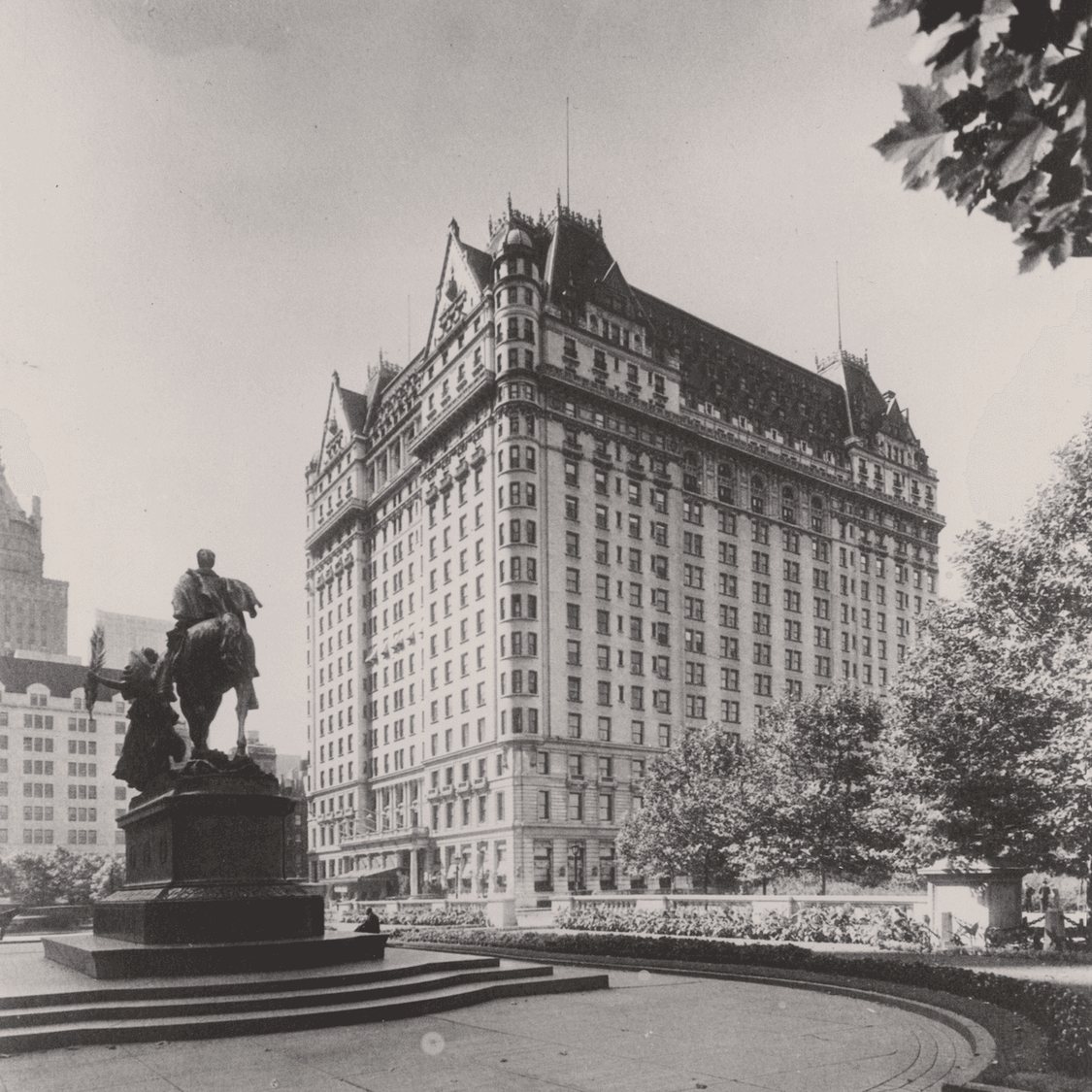
Walk down 5th Avenue – New York's Grand Boulevard
Farmland in the early nineteenth century, by the mid-1800s "Millionaire's Row", lined with Gilded Age mansions, and in the twentieth century the most expensive shopping street in the world.
Along the way: the Empire State Building at 34th Street, the New York Public Library at 42nd, St Patrick's Cathedral, a Gothic Revival statement of Irish Catholic immigrant confidence, and Museum Mile further north.
It has been a route for parades and for protest marches in equal measure — a public street where the city's arguments get had in the open.
-
Visit the Rockefeller Centre – A City Within a City
Built through the Great Depression of the 1930s and funded by John D. Rockefeller Jr. when work was scarce, employing thousands and standing as a deliberate statement that the country would recover.
• Architecture: a group of Art Deco buildings with 30 Rockefeller Plaza at the centre, all vertical lines and confidence.
• Art: murals and sculpture on the themes of progress, labour and cooperation, including the bronze Prometheus above the Channel Gardens.
• Broadcasting: home to NBC Studios since the 1930s, and to a great deal of American radio and television since.
• Traditions: the Christmas tree has been lit here since 1933 and the ice rink opened in 1936.
-
Take the coach back to the airport
-
Fly back from JFK
Day 7 · Touch down after five nights in New York
Home, with the whole story
Arrive back in the UK
Touch down after five nights in New York
-
Arrive back in the UK
Want this trip built around your school?
Every itinerary here is a starting point. Tell us your dates, your year group and your budget, and we will rework it.